Gen Z and students
5 min read
The Role of Peer Influence in University Marketing
Why peer influence drives student buying, where recommendations spread at university, and how brands can seed whole flats, societies and friendship groups.
Peer influence is how most brands spread through a university. One student tries something, their flatmates see it, and the recommendation travels through kitchens, societies and group chats. Brands cannot buy that recommendation, but they can make it more likely by putting a good product in the right hands while students are forming friendships and habits.
Key points
Students trust friends and flatmates more than any advert.
University concentrates peer influence: shared flats, shared kitchens, societies and group chats, all forming in the same few weeks.
Seeding a whole hall at once starts conversations that a single sample cannot.
Ambassadors, societies and referral offers work when they are built on a product students like.
You can measure the conditions for word of mouth. The median brand in Dig In’s benchmark scored 96% would recommend after sampling (2025, 20 surveys).
Why peer influence is so strong at university
Three things make students especially responsive to each other.
Social proof. In a new place, students look to the people around them for cues about what to use, wear and buy.
Belonging. Shared products and shared experiences are part of how new friendships form in the first weeks.
Trust. A friend has nothing to gain from a recommendation and has used the product, so their view carries more weight than a brand’s.
University also concentrates these effects in time and space. Hundreds of thousands of first-year students arrive in the same weeks, move into shared flats and start talking. That is why the start of term matters so much for brands that want to be talked about.
Where student recommendations happen
The flat and the shared kitchen
The shared kitchen is where products are seen, borrowed and discussed. When one flatmate likes a snack or a sauce, the rest of the flat often tries it within days.
Societies and clubs
Societies bring together students with shared interests, from sport and gaming to business and culture. Their committee members and most active members shape what others try, at events and in group chats.
Group chats and social media
Most real recommendations travel through private group chats, which brands cannot buy their way into. Public posts matter too: for Santander’s 2025 Welcome Bag tote, students shared 10,000+ photos, according to Santander’s End of Campaign Report.
Strategies that use peer influence
Seed whole flats, not individuals
A sample that arrives in every room of a hall at the same time gives flatmates something to compare and talk about. Dig In’s Welcome Bag reaches 500,000 students each September across 1,000+ halls, so a product lands with whole flats at once. See how the Welcome Bag works.
Work with societies
Sponsor events, supply product for socials or training sessions, or create something useful for members. A real role in the society’s year works better than a logo on a banner.
Recruit ambassadors who already use the product
Ambassadors carry a brand into their own friendship groups. Choose well-connected students who like the product, brief them clearly and let them speak in their own words.
Reward referrals
Referral offers suit banks, mobile networks and subscription brands, where one sign-up can lead to several. Keep the reward simple and the mechanic easy to share.
Create moments worth sharing
Students share what is useful, funny or good-looking. A product they want to photograph, or an activation that gives them a story to tell, extends a campaign well beyond the people it reached directly.
How to measure peer influence
Word of mouth is hard to track directly, but you can measure the conditions for it. Ask students in a post-trial survey whether they would recommend the product. In NIVEA’s Freshers 2024 survey, 98% of students said they would recommend Nivea Soft (n=2,986); see the Nivea Soft 2024 case study. Across the Dig In Trial Benchmark of 196 brand surveys for 161 brands since 2018, the median brand scored 96% would recommend (2025, 20 surveys).
Track referral codes, shares and tagged posts alongside the survey. Recommendation intent is a signal of word of mouth rather than proof of sales, so report it next to purchase intent and any redemption data you have.
Mistakes that stop word of mouth
Scripted ambassadors. Students spot copy that sounds like an advert, and it costs the brand credibility.
A product that is not good enough. Peer influence amplifies the product students experience, whether good or bad.
One student per flat. Without flatmates who have the same product, there is no one to compare notes with.
No way to act. A recommendation needs somewhere to go, such as a code, a link or an offer.
Bad timing. Arriving after friendship groups and routines have settled means fewer conversations to join.
Peer influence and Gen Z
This generation grew up comparing notes online before buying anything, and it carries that habit into university. Small creators who feel like peers often earn more trust than big names, and recommendations from people students know earn the most of all. More on this in our guide to what Gen Z students want from brands.
Questions brands ask
How important is peer influence in student marketing?
It is one of the biggest factors. Students trust friends and flatmates more than advertising, and university concentrates those relationships, so a recommendation can spread through a flat or society within days.
How can brands encourage students to recommend their product?
Put a good product in the hands of whole flats at once, support it through societies or ambassadors, and give students an easy way to share, such as a referral code.
Do student ambassador programmes work?
They work when ambassadors genuinely use the product and speak in their own words. Scripted programmes are easy for students to spot and can do more harm than good.
Working with Dig In
Dig In puts products into whole halls at once through the Welcome Bag and Live Activations, then asks students what they thought. To start conversations in student flats, talk to the team.
Read next

Gen Z and students
The Student Effect: Household Influence, Word of Mouth and Physical Marketing in the Age of AI
How returning students shape what their families buy and what their friends try, and an honest look at whether physical marketing such as sampling still earns its place as AI changes advertising.
9 min read

Gen Z and students
Student Cost of Living in the UK: What Students Spend, What They Get and What It Means for Brands
What UK students spend each month, including food, against what the Maintenance Loan covers, and how the gap shapes what students buy and try.
8 min read
Gen Z and students
UK Student Population Statistics: How Many University Students Are There in the UK?
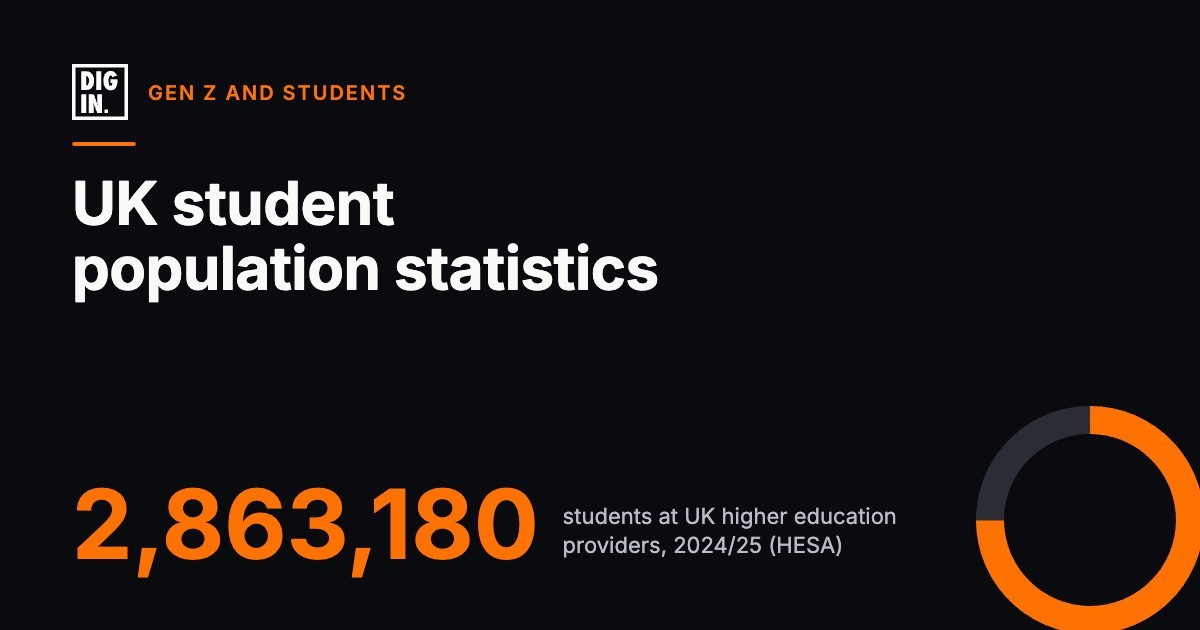
The latest HESA and UCAS figures on the UK student population: total enrolments, first-year intake, entry rates and the rise in students living at home.
8 min read